

Learning to Say Kamu: How One Small Word Changed the Way an ACICIS Student Experienced Indonesia
“Hillary, we’re friends. You can say kamu.”
A small correction, but for Hillary Mansour, it became something else entirely.
For Indonesian, pronominals are something more than forms of address. They establish a subtle yet palpable hierarchy and relationship between individuals. More often, it makes many foreign speakers leave with the feeling ‘I think I need to relearn everything from scratch.’
And that’s how Hillary felt once she arrived in Yogyakarta in 2018 as a part of ACICIS exchange program.
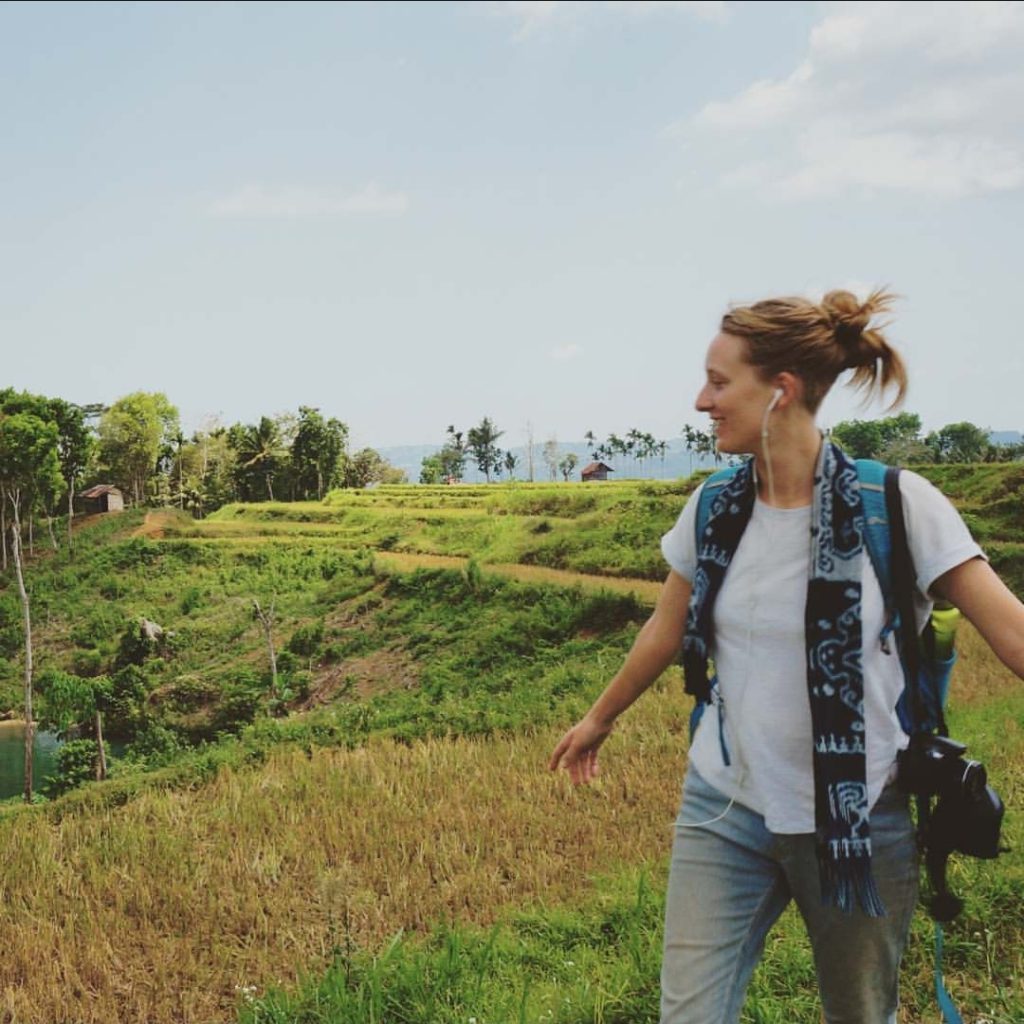
Years of careful language study suddenly collided with the way people actually spoke. She found herself relearning how to speak from scratch. The grammar she’d spent years memorising wasn’t wrong, exactly. It just wasn’t the language people reached for over coffee, at the warung, or on the back of a Gojek weaving through traffic in Yogya.
Many moments felt surreal but it unlocked conversations that would otherwise have stayed closed, opening a path into local music, humour, family life and friendships that can hardly be found in a normal course outline. Yet, it is what made Hillary’s study in Indonesia become more immersive.
During her stay, Hillary lived at kos-kosan. Ibu Yanti and Pak Aan became part of her daily rhythm. There were evenings sitting cross-legged on woven mats during informal ronda malam gatherings, a community tradition which felt welcoming to whoever happened to pull up a seat.
At this moment, Hillary wasn’t observing Indonesian life from the outside anymore. She was slowly becoming part of it.
With thousands of languages and dialects, misunderstanding can be inevitable when speaking with locals. But somehow, Hillary could afford to avoid most of it as she began to speak Indonesian more naturally. Curiosity began flowing both ways and, time after time, strangers responded with generosity. Speaking Indonesian turned out to be useful for far more than ordering meals or haggling at markets.
It offered confidence, shaping the way she travelled. Weekends disappeared into camping trips on Mount Merbabu, surfing along the south coast of Java, and island-hopping through Karimunjawa. Even the ordinary felt slightly adventurous: weaving through traffic on the back of a Gojek with an oversized helmet and a driver who was determined to fit both passenger and selfie into the same journey.

Her trips became more comfortable in a way she didn’t expect, especially for a young woman who is travelling alone across Indonesia.
Of course, some of Hillary’s lasting lessons arrived inside the classrooms.
Studying alongside Indonesian classmates meant stepping into conversations where Australia wasn’t viewed positively. Questions about foreign policy, colonial history, and national identity landed on her desk simply because she is Australian.
Those discussions forced her to examine many different Indonesian perspectives of Australia, and consider the ways in which she felt comfortable representing her home country to others. Conversely, her Indonesian classmates were wrestling with difficult questions about their own country’s history, making the exchange anything but one-sided. Everyone was testing assumptions, challenging inherited ideas and learning that two neighbours can look at the same event and come away with entirely different interpretations.
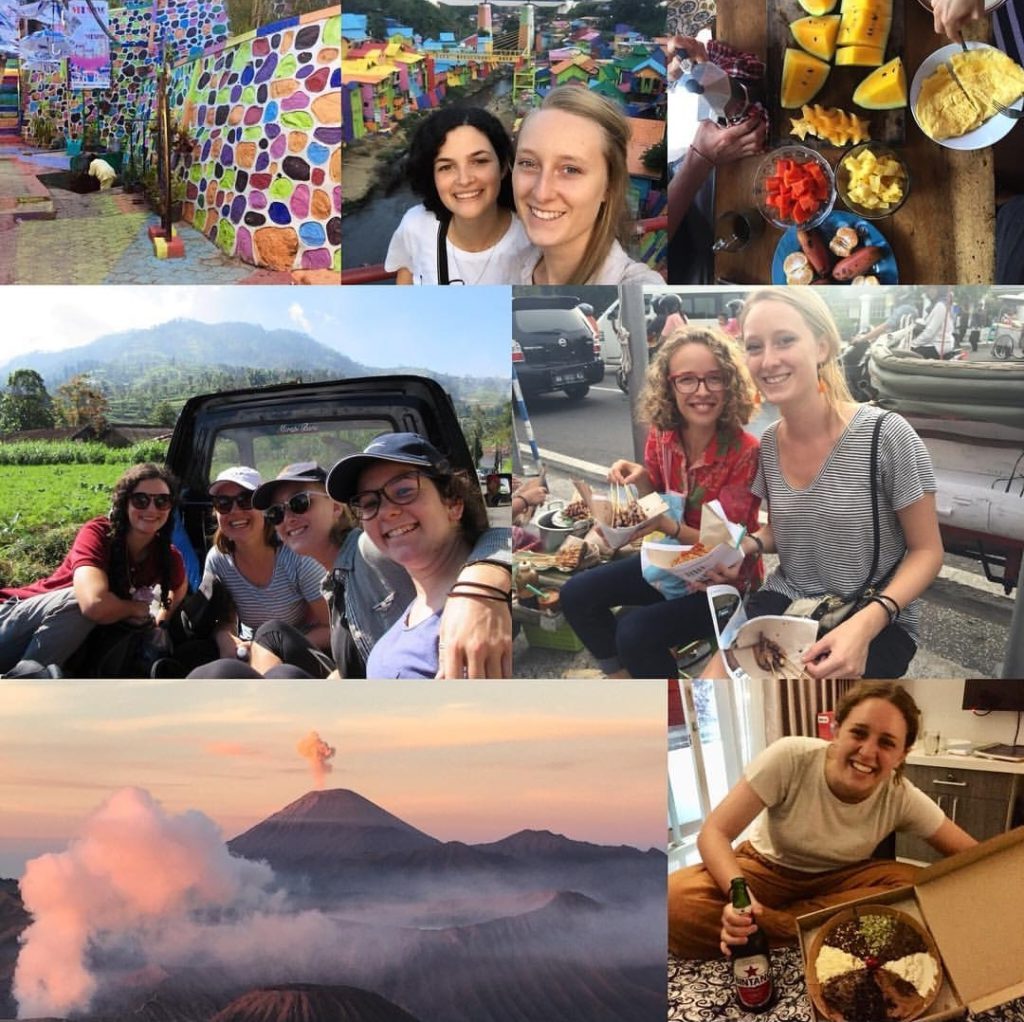
Upon the completion of her programme, Hillary returned to Australia and completed her Honours while teaching Indonesian at the University of Melbourne. From ronda malam to classroom discussions, what followed was not a life simply inspired from afar, but one woven in part from Indonesian soil. Hillary carried this with her into a career focused on regional affairs.
Like a carefully intertwined thread, Hillary Mansour’s story forms part of the tapestry that runs through Experiencing Indonesia: 30 Years of ACICIS. Across three decades, many alumni describe language as only the beginning. The lasting impact always comes from everyday encounters like conversations with locals that challenge assumptions, communities that welcome strangers, and friendships that continue years later. It is an experience that quietly reshapes the way participants understand both Indonesia and Australia, over and above what general understanding can offer.
For plenty of Australians, Indonesia is the country just across the water. A holiday destination, perhaps. A language elective. Somewhere familiar enough to recognise, yet still distant in everyday conversation.
However, as Australia once again debates on how to strengthen its Asia capability, reflections like Hillary’s feel remarkably timely. They suggest that genuine regional literacy isn’t solely built through briefing notes or strategic frameworks. More than often, it prospers from shared meals, difficult conversations, imperfect language and the willingness to spend a long enough time in another country for it to stop feeling foreign.
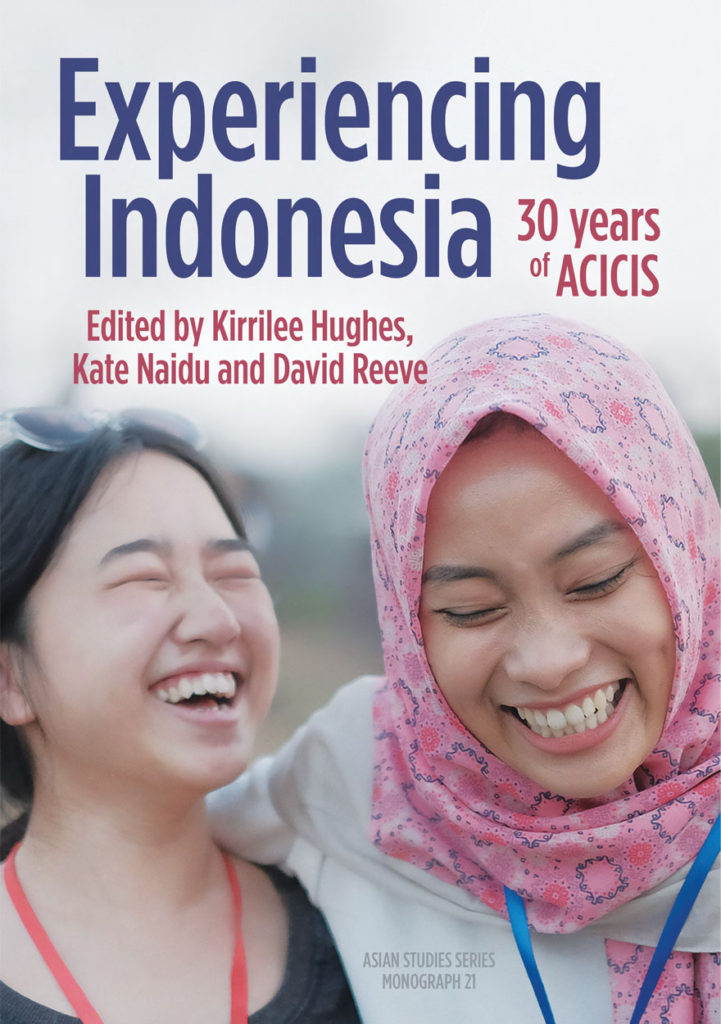
Experiencing Indonesia: 30 Years of ACICIS, published by ANU Press, is a collection of stories from students, staff and long-time partners who significantly fashioned one of Australia’s longest-running educational bridges with Indonesia.
Some people leave Indonesia with souvenirs, but Hillary left with lessons and insights she still carries years later.
This article is written by:
Tri Nurmalina Pambudi (Lina)
AIYA National Communications Coordinator (Publishing)
Adapted from Hillary Mansour’s chapter in Experiencing Indonesia: 30 Years of ACICIS.